


 by Totally Branded
Engraving Promotional Products: The Complete Guide
Engraving is one of the most popular decoration methods used for promotional products, particularly when a business wants its branded merchandise to feel premium, long lasting and professional. It is often chosen for items that are expected to be kept and used regularly, such as metal pens, water bottles, travel mugs, keyrings, awards, notebooks and technology accessories. Rather than creating loud, colourful branding, engraving creates a more subtle finish that feels part of the product itself.
When people think about branded merchandise, they often think first about the product: the pen, the bottle, the mug, the notebook or the giveaway item. However, the decoration method is just as important as the product choice. The same product can feel completely different depending on whether it is printed, embroidered, embossed, debossed or engraved. Engraving is the option many brands turn to when they want the final item to look clean, sharp and considered.
This guide explains what engraving is, how it works, the pros and cons, which materials can be engraved, which products usually work best and what businesses should consider before choosing it. It is written to give a practical understanding of engraving as a branded merchandise decoration method, without making the process feel unnecessarily technical.
What Is Engraving?
Engraving is a decoration method where a logo, design, name, message or piece of text is permanently etched into the surface of a product. Instead of adding ink or another material to the top of the product, engraving removes a very small amount of the surface to create a precise mark. This mark is usually indented, textured or visually different from the surrounding material.
A simple way to understand it is this: printing adds your logo to a product, while engraving places your logo into the product. That distinction is important because it explains why engraved branding is so durable. The logo is not sitting on top of the item. It has become part of the item itself.
The finished result is usually clean, crisp and permanent. You can often see it, feel it and recognise immediately that it has been applied in a more premium way. Because there is no ink involved, engraved branding will not peel away in the same way a transfer might, and it will not fade in the same way some printed finishes can over time.
Engraving can be used for a wide range of purposes. It can display a company logo, an employee name, a customer name, a short message, an award title, a campaign phrase or even individual personalisation. This flexibility is one of the reasons it is so commonly used for corporate gifting and recognition products.

Why Businesses Choose Engraving
Businesses choose engraving for different reasons, but the most common reason is perceived quality. Engraved products often look more expensive and feel more considered than items with louder print decoration. This makes engraving particularly useful for merchandise that is being used as a gift rather than a simple giveaway.
For example, a metal pen with a printed logo can still be useful, but the same pen with an engraved logo can feel more professional. A stainless steel bottle with an engraved mark can feel more premium than one with a large coloured print, especially if the brand wants a subtle and sophisticated appearance. The method changes how the recipient interprets the product.
Another reason businesses choose engraving is durability. Promotional products are only valuable if people continue to use them. If the branding rubs off quickly, the product can lose its impact. Engraving helps avoid that issue because the branding is designed to last for the lifetime of the product.
Engraving also suits brands that want to avoid overly sales-focused merchandise. Some people dislike products that feel too heavily branded. A subtle engraved logo can make an item feel useful and attractive rather than promotional. This can make recipients more likely to keep it on their desk, carry it in their bag or use it in public.
How Laser Engraving Works
Although engraving sounds technical, the basic process is fairly straightforward. The supplier starts by preparing the artwork digitally. This usually means checking the logo file, confirming the size of the branding area and making sure the design will reproduce clearly when engraved.
The artwork is then programmed into specialist engraving software. The machine operator sets the correct size, position and settings for the product being engraved. This is important because different products and materials require different settings. A bamboo product, for example, will react differently from stainless steel or soft PU material.
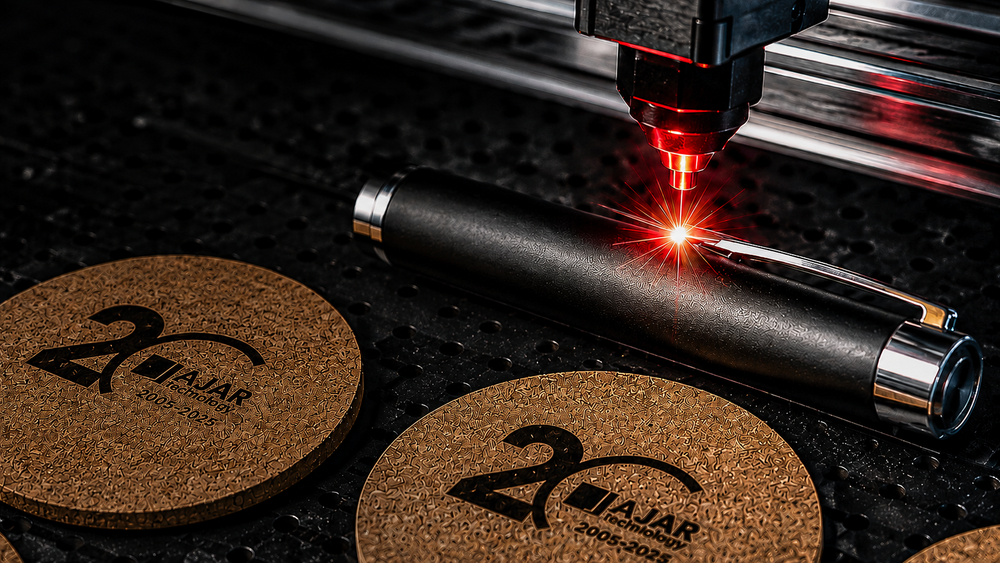
Once the product is positioned correctly, the laser moves across the surface and removes a very thin layer of material. Depending on the substrate, the laser may burn, vaporise or mark the surface. The result is a permanent design that is either recessed into the product or visually contrasted against the surrounding area.
After engraving, products often need to be wiped or cleaned. Some materials leave residue behind where the surface has been etched away. A quick clean helps ensure the final mark is sharp and professional. The item is then inspected to make sure the logo is positioned correctly and the finish meets the expected standard.
The process can be quick, but it still requires specialist equipment and trained operators. Engraving is not simply a case of pressing a button. The quality of the final result depends on the artwork, the material, the machine settings and the experience of the production team.

Different Lasers for Different Materials
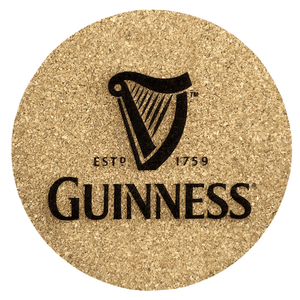
One thing that is useful to understand is that not every laser is suitable for every material. Different types of laser engraving machines are used depending on the substrate. For example, CO2 lasers are commonly used for organic materials such as wood, bamboo, cork and some plastics. Fibre lasers are often used for metals and certain coated materials.
This is not something customers usually need to manage themselves, but it explains why suppliers may recommend engraving on some products and not on others. A supplier will usually know which machine, power level and settings are appropriate for the item being branded.
This is also why testing and supplier experience matter. A product may look suitable for engraving, but the surface coating or material composition may affect the final result. Two similar-looking products can sometimes engrave differently, especially if one has a coating, lacquer or mixed material finish.
For customers, the main point is to rely on product advice rather than assuming every item can be engraved. If engraving is not suitable, a good supplier should suggest another decoration method that will create a better result.
Materials That Can Be Engraved
Engraving can work on a wide range of materials, but the final appearance varies depending on the surface. Metal is one of the most common engraving materials. Stainless steel, aluminium and other metals often produce a clean, premium finish. Metal products are also usually durable, which makes engraving a good match.
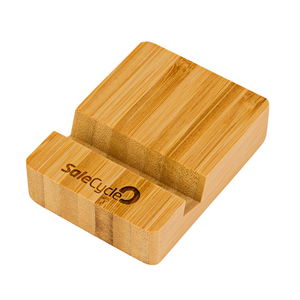
Wood is another popular choice. Engraving on wood can create a warm, natural look. The laser marks the surface and the finish often has a darker contrast. However, because wood is natural, grain patterns and colour variations can affect consistency. This is not necessarily a negative point, but it should be understood before ordering.
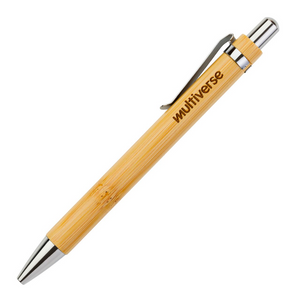
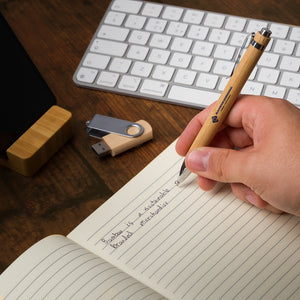
Bamboo is widely used in promotional merchandise because it has a natural appearance and is often associated with eco-conscious product ranges. Engraving works well on many bamboo products, including pens, wireless chargers, notebooks and drinkware. As with wood, natural variation should be expected.
Leather and PU can also be engraved, depending on the exact material. The finish can be subtle and premium, particularly on notebooks, luggage tags and folders. However, not all PU materials react the same way, so supplier guidance is important.
Glass and crystal can be engraved or etched to create a high-end finish, especially for awards, trophies and presentation items. These products are often used for recognition, celebration and corporate gifting because the decoration feels permanent and meaningful.
Cork, certain plastics and coated materials may also be suitable, although results will vary. The key is always to match the product, material and branding method properly.
The Main Advantages of Engraving
The first major advantage of engraving is durability. Because the design is etched into the product rather than placed on top of it, it is far less likely to wear away. This makes it ideal for products that will be handled frequently, carried around or washed, such as bottles, keyrings and metal accessories.
The second advantage is appearance. Engraving has a clean and premium look. It can make a product feel more expensive, even when the item itself is relatively simple. This is why engraving is frequently used for executive gifts, employee rewards, client gifts and awards.
A third advantage is subtlety. Not every campaign needs a bright, bold logo. Sometimes a more understated mark is more effective. Engraving allows a brand to be present without overpowering the product. This can make merchandise feel less sales-driven and more genuinely useful.
Engraving also works well for personalisation. Adding individual names or initials can make a product feel much more valuable to the recipient. A notebook with a person's name engraved on it, for example, is more likely to be kept than a generic notebook.
Another advantage is that engraving can suit many different brand styles. It can work for professional services, technology companies, hospitality brands, education providers, finance businesses, manufacturers and many others. It is not restricted to one sector.
The Main Disadvantages of Engraving
Although engraving has many benefits, it is not the right choice for every order. The main limitation is that engraving does not use colour. If a brand needs its logo to be highly visible from a distance, engraving may be too subtle. This is especially true on small items where the branding area is limited.
Another limitation is material suitability. Some products simply do not engrave well. Soft, uneven, coated or highly textured surfaces may not produce a clean finish. In some cases, another branding method such as print, debossing or embroidery may be more appropriate.
Design detail can also be an issue. Very small text, fine lines and complex logos may not reproduce clearly, particularly on small products. Engraving usually works best with bold, simple artwork. If a logo is very detailed, it may need to be simplified before production.
Natural variation is another consideration. Materials such as bamboo and wood can differ from item to item. This means the engraved mark may not look exactly identical across every product. For many campaigns, this adds character. For others, especially where strict consistency is required, it may need to be considered carefully.
Cost can also be a factor. Although engraving does not use ink, the machinery and setup involved can sometimes make it more expensive than basic single-colour printing, particularly on smaller quantities. The final cost depends on the product, order quantity, branding size and setup requirements.
Engraving and Brand Perception
The decoration method you choose influences how people perceive your brand. A product with poor decoration can make a brand feel careless, even if the product itself is useful. A well-executed engraved finish can do the opposite. It can make a simple product feel thoughtful and professional.
This matters because branded merchandise is often used to communicate something about a company. It may be given to customers, prospects, employees, suppliers or event attendees. The recipient forms an impression not only from the product itself, but from the way the brand appears on it.
Engraving can communicate quality, confidence and restraint. It does not shout for attention. Instead, it suggests that the brand has chosen a more permanent and considered finish. For many businesses, especially those in professional or premium markets, that can be very valuable.
However, brand perception depends on context. A subtle engraved logo may be perfect for an executive gift but less effective for a busy exhibition where the aim is to create instant visibility. This is why the right decoration method should always be chosen based on the purpose of the campaign.
Products That Work Well With Engraving
Metal pens are one of the most common engraved promotional products. They are practical, easy to distribute and often used regularly. Engraving works well because it creates a sharp finish and prevents the logo from wearing away quickly.
Drinkware is another strong category. Water bottles, travel mugs and tumblers are often used daily, which makes durability important. An engraved bottle can feel premium and is more likely to be kept, especially if the design is subtle and attractive.
Keyrings are also well suited to engraving because they experience regular handling. Printed decoration on keyrings can sometimes wear, whereas engraving is more likely to remain visible over time. This makes it useful for products that spend time in pockets, bags and hands.
Technology accessories can also work well. Wireless chargers, power banks, USB drives and speakers often benefit from a more refined decoration method. Engraving can help these items feel like gifts rather than basic giveaways.
Awards and recognition products are perhaps one of the most natural uses for engraving. Names, dates, achievements and messages can be permanently marked onto the item, making it feel personal and significant.
Notebooks, folders, luggage tags, desk accessories and gift sets can also be effective choices depending on the material. The best products are usually those that already have a premium or long-lasting feel.

When Engraving Is the Right Choice
Engraving is a strong choice when the product is intended to be kept and used long term. If the aim is to create a lasting impression rather than a quick giveaway, engraving can be highly effective. It is particularly suitable for client gifts, staff gifts, awards, onboarding packs and premium event merchandise.
It is also suitable when the brand wants a subtle and professional look. If the product itself has a high-quality appearance, engraving can complement it beautifully. A small engraved logo on a sleek metal bottle, for example, can feel much more refined than a large printed mark.
Engraving is also the right choice when durability is a priority. Products that will be handled frequently, washed or carried around need decoration that can withstand use. Engraving is one of the strongest options for that type of application.
Personalisation is another reason to choose engraving. Adding individual names can make merchandise feel more thoughtful and valuable. This is especially useful for employee recognition, client gifting and membership programmes.
When Engraving Might Not Be the Best Choice
Engraving may not be the best choice when a campaign needs bright colours or maximum logo visibility. If the product needs to be seen clearly from a distance, full-colour print or screen printing may be more appropriate.
It may also not be suitable when the artwork is very detailed. Logos with gradients, shadows, tiny lettering or complex illustrations may not translate well into engraving. In these situations, artwork may need to be simplified or another branding method may be recommended.
Some low-cost giveaway campaigns may also be better suited to print. If the aim is to distribute very large quantities at the lowest possible cost, engraving may not always be the most economical route.
Finally, engraving may not suit every material. Some products are better printed, embossed, embroidered or labelled. A good supplier should always be able to advise based on the specific item and desired result.
Engraving Compared With Printing
Printing and engraving are two very different decoration methods. Printing applies ink or colour to the surface of a product. This makes it ideal for logos that need colour, detail or strong visibility. It is often used for exhibition giveaways, promotional campaigns and products where brand recognition needs to be immediate.
Engraving, on the other hand, is more about permanence and finish. It may not stand out as strongly from a distance, but it often feels more premium up close. It is especially effective on metal, wood, bamboo and gift products.
Neither method is better in every situation. The right choice depends on what the product needs to achieve. If the goal is bold visibility, printing may be better. If the goal is quality, durability and subtle presentation, engraving may be better.
Engraving Compared With Embroidery
Embroidery is most commonly used for clothing, bags and textiles. It creates a stitched design that can feel premium and durable on fabric. Engraving is used mainly for hard products such as metal, wood, glass, bamboo and plastic.
Both methods are associated with quality, but they apply to different product types. Embroidery is often the preferred choice for uniforms, caps, jackets and bags. Engraving is often preferred for drinkware, pens, tech accessories, awards and executive gifts.
In some campaigns, both methods might be used together. For example, a staff onboarding pack could include an embroidered polo shirt and an engraved bottle. Each method supports the product it is applied to.
Artwork Guidelines for Engraving
Good artwork is essential for a clean engraved result. The best starting point is usually vector artwork, such as an AI, EPS, SVG or vector PDF file. Vector files can be resized without losing quality, which helps ensure the engraved mark stays sharp.
Simple artwork tends to work best. Bold lines, clear shapes and readable text are more likely to engrave successfully. Very fine details may disappear or become difficult to see, especially on small products.
Fonts should also be considered carefully. Extremely thin or decorative fonts may not reproduce clearly. If text is required, it should be large enough to read and simple enough to engrave cleanly.
The size of the branding area also matters. A logo that looks clear on a screen may become too small when placed on a pen or keyring. A supplier can advise whether the artwork needs adjusting for the product.
It is usually worth approving a visual proof before production begins. This allows the customer to check position, size and general appearance before the order is produced.
Engraving on Natural Materials
Natural materials such as wood and bamboo are popular choices, but they behave differently from manufactured surfaces. Each item may have slightly different grain, colour and density. This can affect how the engraved mark appears.
On one bamboo product, the engraving may look darker. On another, it may appear lighter. This variation is normal and is part of the character of natural materials. It does not usually mean the product is faulty.
For brands that value a natural, organic appearance, this can be a positive feature. It makes each item feel slightly unique. However, for brands that need absolute consistency across every product, it is something to discuss before ordering.
The important point is expectation. Natural substrates can produce beautiful, engraved results, but they should not always be expected to look identical in the way a printed synthetic surface might.

Engraving and Sustainability
Engraving is often associated with sustainable promotional merchandise, particularly when used on products made from bamboo, cork, wood, recycled metal or long-lasting materials. The decoration itself does not require multiple ink colours, and the finish is designed to last.
However, sustainability should be considered as a whole. The product material, manufacturing process, packaging, transport and expected lifespan all matter. An engraved product is not automatically sustainable simply because it is engraved.
That said, engraving can support better buying decisions when it is used on durable products that recipients will keep. A product that is used for years is usually more valuable than a cheaper item that is discarded quickly.
For businesses trying to make more responsible merchandise choices, engraving can be part of a wider approach focused on quality over quantity.
Engraving for Employee Gifts
Employee gifting is one of the strongest uses for engraving. A product with a person's name engraved on it can feel much more personal than a generic branded item. This is useful for onboarding packs, milestone gifts, long-service awards and internal recognition.
For example, an engraved bottle, notebook or desk accessory can make a new employee feel welcomed. A personalised award can make an achievement feel properly recognised. A branded gift set can feel more considered when the decoration is subtle and high quality.
Engraving also helps avoid gifts feeling too promotional. Employees are more likely to use products that feel genuinely useful and attractive, rather than items that feel like advertising materials.
Engraving for Client Gifts
Client gifts need to feel professional. If a gift looks cheap or poorly branded, it can have the opposite effect from what was intended. Engraving helps create a more refined impression.
A subtly engraved product can be used to thank customers, mark a business milestone, support an event or strengthen a relationship. The branding is present, but it does not dominate the item. This can make the recipient more likely to keep and use it.
Client gifts are often judged by quality rather than quantity. A smaller number of better-quality engraved gifts may have more impact than a larger number of low-cost products that are quickly forgotten.
Engraving for Events and Exhibitions
Engraving can work well for events, but it depends on the event objective. For premium events, conferences, awards evenings or VIP gifting, engraved merchandise can be highly effective. It gives attendees something memorable and useful to take away.
For high-volume exhibitions, engraving may or may not be the best option. If the main goal is to hand out large numbers of branded items quickly and cheaply, printing may be more suitable. However, if the aim is to create a more selective gift for key prospects, engraving can work very well.
This is where planning matters. The best event merchandise is not chosen simply because it looks good online. It is chosen because it matches the audience, the setting and the purpose of the campaign.
Common Mistakes to Avoid
One common mistake is choosing engraving without considering visibility. Engraving can look beautiful up close, but it may not be highly visible from far away. If the product needs to act like a moving advert, another method may be better.
Another mistake is using artwork that is too detailed. Complex logos, fine lines and small text can lose clarity. Simplifying artwork often leads to a better finished product.
A third mistake is assuming all materials will engrave the same way. Natural materials, coated surfaces and mixed substrates can all produce different results. Checking suitability before ordering is important.
Finally, customers sometimes focus only on the decoration method and forget about the product quality. Engraving can improve the perceived value of a product, but it cannot turn a poor-quality item into a premium gift. Product selection still matters.
Questions to Ask Before Ordering Engraved Products
Before placing an order, it is sensible to ask a few key questions. Is this product suitable for engraving? Will the logo be visible enough? Is the artwork suitable? Are there any limitations with the material? Can a proof be provided? What will the final finish look like?
It is also worth asking whether personalisation is possible, whether the engraving cost is included in the quoted price and whether there are any setup charges. Clear answers at the beginning can help avoid confusion later.
A good supplier should be transparent about what will and will not work. If engraving is not the best option, they should be able to recommend an alternative.
Frequently Asked Questions
Does engraving fade? In normal use, engraved branding does not fade in the same way as printed decoration because the mark is part of the product surface.
Can engraving be done in colour? Traditional engraving does not add colour. The final appearance depends on the product material and the contrast created by the engraving process.
Can all products be engraved? No. Suitability depends on the material, surface, coating and product shape.
Is engraving expensive? It depends on the product, quantity and design. It can cost more than basic print methods, but it often provides a more premium and durable finish.
Can engraved products be personalised? Yes. Engraving is one of the best methods for adding names, initials and individual messages.
Is engraving better than printing? Not always. Engraving is better for durability and premium appearance, while printing is often better for colour and visibility.
Final Thoughts
Engraving is one of the most effective decoration methods for businesses that want branded merchandise to feel premium, durable and professional. It is not designed to be the loudest or most colourful option. Instead, it is designed to create a lasting mark that feels integrated into the product.
When used in the right context, engraved promotional products can be kept and used for years. They can make a brand feel more considered, more professional and more confident. They are particularly effective for client gifting, employee recognition, awards, premium events and long-lasting everyday products.
However, engraving is not right for every campaign. If strong colour, high visibility or detailed artwork is required, another decoration method may be more suitable. The best choice always depends on the product, the audience and the message the brand wants to communicate.
For businesses looking for subtle, long-lasting and high-quality branded merchandise, engraving remains one of the strongest decoration methods available.
Practical Example: A Branded Bottle
Imagine a business wants to give customers a reusable stainless steel bottle. If the logo is printed in a large colour block, the product may stand out immediately, but it may also feel more promotional. If the same bottle is engraved with a smaller logo, the result can feel more subtle and premium. The customer may be more likely to use it regularly because it does not feel like obvious advertising.
This example shows why engraving is often about balance. It still gives the brand exposure, but it does so in a quieter way. For certain audiences, that can be much more effective than a bold printed logo.
Practical Example: An Employee Onboarding Pack
An onboarding pack is another strong use case. A new starter might receive a notebook, bottle, pen and desk accessory. If each item is engraved or personalised, the pack can feel thoughtful rather than generic. Adding the employee's name or initials can make the products feel like they were created specifically for them.
This is especially useful for businesses that want to improve staff experience. Small details can make a difference. Engraving can help a simple welcome pack feel more polished and professional.
Practical Example: Awards and Recognition
Awards are designed to be kept. For that reason, the decoration method needs to last. Engraving is ideal because the recipient's name, achievement, date or message becomes a permanent part of the award. It feels official and meaningful.
A printed award may still look good, but engraving often gives a stronger sense of permanence. It suggests that the achievement mattered enough to be marked properly. This is why engraving is so widely used for trophies, plaques, crystal awards and recognition gifts.
How Engraving Supports Long-Term Brand Exposure
Promotional products work best when they are used repeatedly. A product that is kept on a desk, carried to meetings or used every day creates more long-term exposure than an item that is thrown away quickly. Engraving can support this because it helps products feel more valuable.
When recipients like the product, they keep it. When they keep it, the brand remains present. This is one of the main reasons businesses invest in better-quality merchandise and more durable decoration methods. The value is not only in the first impression, but in the repeated use over time.
Why Subtle Branding Can Be More Powerful
It can be tempting to make branding as large and visible as possible, but that is not always the most effective approach. Many people prefer products that fit naturally into their life or workspace. If a logo is too large or too loud, the recipient may be less likely to use the item.
Engraving allows the brand to remain visible without overwhelming the product. This can be particularly important for premium gifts, professional audiences and products that people use in public. A subtle engraved logo can feel stylish, whereas a large printed logo may feel too promotional.
The Role of Supplier Advice
Choosing engraving should not be a guess. A good supplier will be able to advise whether a product is suitable, what finish to expect and whether the artwork needs adjustment. They should also explain any limitations clearly before production begins.
Supplier advice is especially important when working with natural materials, coated products or unusual shapes. The best results come from matching the product, material, branding method and artwork properly.
If a supplier recommends a different decoration method, it is usually worth understanding why. The goal should always be the best finished product, not simply forcing one method onto every item.
Summary Checklist
Before choosing engraving, consider whether the product is intended to last, whether subtle branding suits the campaign, whether colour is essential, whether the artwork is simple enough and whether the material is suitable. If the answer to most of these questions is yes, engraving could be an excellent choice.
If the campaign needs bold colour, maximum visibility or very complex artwork, it may be better to explore other options. The most successful branded merchandise decisions usually come from choosing the right decoration method for the specific product and purpose.
How to Choose the Right Engraved Product
Choosing the right engraved product starts with understanding what the item is expected to do. A product being used as a simple giveaway has a very different purpose from a product being sent to a key customer. Before selecting the item, it helps to ask who will receive it, how often they are likely to use it and what impression the business wants to create.
If the product is for internal staff, practicality may be the most important factor. Bottles, notebooks, pens and desk accessories are all useful in day-to-day working life. If the product is for a customer or prospect, the perceived value may matter more. A carefully chosen engraved gift can suggest that the relationship is important and that thought has gone into the selection.
It is also important to consider where the product will be used. An engraved bottle used in meetings, at the gym or on the commute can create repeated brand exposure. An engraved award may sit on a desk or shelf for years. A tech accessory may travel with the recipient and become part of their everyday routine. These practical considerations can help a business choose products that will actually be kept.
The product should also match the brand. A modern technology company may choose engraved wireless chargers or power banks. A professional services firm may prefer pens, notebooks or executive desk gifts. A hospitality brand may choose engraved drinkware, bottle openers or serving products. The strongest merchandise choices feel connected to the business rather than random.
Understanding the Finished Look
One of the most important things to remember is that engraving does not look the same on every product. On some metals, the logo may appear silver or slightly lighter than the surrounding surface. On coated bottles, the laser may remove the outer coating to reveal the metal underneath. On bamboo or wood, the engraved area may appear darker because the laser has marked the natural material.
This means customers should not assume the final appearance will always be high contrast. Some engraved finishes are deliberately subtle. That can be part of the appeal, but it must be understood before ordering. If the business needs the logo to be immediately obvious, the supplier should confirm whether engraving will provide enough visibility.
A visual proof is helpful, but it is also worth remembering that a screen proof cannot always show the exact texture, depth or contrast of engraving. For higher-value orders, a physical sample or pre-production sample may be useful. This allows the customer to see how the engraving actually appears on the chosen product.
The Importance of Branding Size and Position
Branding size and position can make a significant difference to the finished product. A logo that is too small may be difficult to read. A logo that is too large may lose the subtle, premium feel that engraving is often chosen for. The right balance is important.
On products such as pens, the available branding area is narrow, so artwork needs to be simple. On bottles and mugs, the area may be larger, but curves can affect how the logo is positioned. On notebooks and flat products, there may be more flexibility, but the material surface still needs to be considered.
Position also affects how the product is used and seen. A logo on the front of a bottle may be more visible, while a smaller mark near the base may feel more understated. A notebook might have branding centred on the cover or placed discreetly in a corner. These decisions should be guided by the purpose of the product and the desired brand impression.
Why Quality Control Matters
Engraving is a precise process, but quality control is still important. Products should be checked for correct placement, clarity, consistency and cleanliness. This is especially important when engraving natural materials, where each item may vary slightly.
Quality control also matters because engraved products are often used for premium gifting. If the branding is misaligned, unclear or inconsistent, the product may not create the intended impression. A good supplier will have checking procedures in place throughout production.
Customers can also support quality by providing suitable artwork, approving proofs carefully and asking questions before production begins. Clear communication at the start usually leads to a smoother result at the end.
Engraving for Repeat Orders
Many businesses reorder the same engraved products throughout the year. This might include staff gifts, customer packs, event merchandise or replacement stock. Repeat orders can be easier once the artwork and setup have already been approved.
However, it is still important to check whether the product itself is exactly the same. Sometimes suppliers update product ranges, coatings or materials. A bottle ordered this year may not be identical to the bottle ordered last year, even if it looks similar online. If consistency matters, it is worth confirming availability and specifications before placing a repeat order.
Repeat ordering can also help businesses build a consistent merchandise range. For example, a company might use the same engraved style across bottles, pens, notebooks and awards. This creates a more joined-up brand experience and helps the merchandise feel intentional.
Engraving and Personalisation
Personalisation is one of the areas where engraving can really stand out. Adding a name, initials or individual message makes a product feel more personal and less generic. This can be particularly effective for employee gifts, awards, membership items and client thank-you gifts.
A personalised item is often harder to discard because it feels as though it belongs to the recipient. This can increase the likelihood that the product will be kept and used. From a brand perspective, that can make the merchandise more valuable over time.
Personalisation does need to be managed carefully. Names must be checked for spelling, data must be supplied clearly and the supplier will usually need a spreadsheet or structured list. Mistakes in personalisation can be difficult to fix once engraving has been completed, so proofing and data accuracy are essential.
Balancing Cost and Value
Engraving is not always the cheapest decoration method, but value should not be judged by cost alone. A lower-cost printed item that is thrown away quickly may provide less value than a slightly more expensive engraved item that is used for years.
The total value of branded merchandise comes from the impression it creates and the length of time it remains in use. If engraving helps a product feel more desirable, professional and durable, it may justify the additional cost.
That does not mean engraving should be used for every order. It means the decision should be made in context. For some campaigns, basic print will be the most sensible and cost-effective option. For others, engraving will deliver a better overall result.
Final Buyer Considerations
Before choosing engraving, a business should be clear on the purpose of the merchandise. Is it designed to be a premium gift, a practical everyday item, an award, a welcome pack or a mass giveaway? The answer will help determine whether engraving is the right fit.
The business should also think about the recipient. Will they appreciate subtle branding? Will they use the product regularly? Would a personalised finish make the item more meaningful? These questions help move the decision beyond simply choosing a product from a catalogue.
Finally, the brand should consider the message it wants to communicate. Engraving often says quality, permanence and professionalism. If those are the qualities the business wants to project, engraving can be an excellent choice.
A Practical Way to Decide Between Engraving and Print
A simple way to decide between engraving and print is to ask what matters most for the order. If colour, visibility and low cost are the most important factors, print may be the stronger option. If durability, personalisation and premium presentation are the priorities, engraving is usually worth considering.
For example, a company ordering giveaway pens for a trade show may choose a printed logo because the aim is to hand out a large quantity at a low cost. The same company ordering gifts for a small group of important customers may choose engraved metal pens because the aim is to make the product feel more valuable.
This does not mean one method is better than the other. It means each method has a different role. The best suppliers will not push one decoration method for every situation. They will help match the method to the product, audience and budget.
What Makes an Engraved Product Feel High Quality?
Several factors influence whether an engraved product feels high quality. The first is the product itself. A well-made product with a good weight, finish and practical use will always create a stronger impression than a flimsy item, even if both are engraved.
The second factor is branding placement. A logo that is positioned neatly and proportionately will look more professional than one that feels too large, too small or awkwardly placed. Small details make a big difference in the final result.
The third factor is artwork quality. Clean artwork leads to clean engraving. If a logo has been stretched, pixelated or poorly converted, the finished product may not look as sharp as expected. Preparing artwork properly is therefore an important part of the process.
The final factor is consistency. Even where natural variation exists, the overall production should feel controlled and carefully checked. A high-quality engraved order should look intentional from start to finish.

How Engraving Fits Into a Wider Merchandise Strategy
Engraving can be used as part of a wider branded merchandise strategy rather than as a one-off choice. Businesses may decide to reserve engraved products for premium audiences, while using printed products for larger campaigns. This helps control budget while still giving key recipients a more special item.
For example, a business might use printed tote bags and notebooks for a large event, but engraved bottles or power banks for VIP attendees. It might use printed giveaways for general prospects and engraved gifts for confirmed customers. This creates different levels of merchandise for different purposes.
Using engraving selectively can make it feel more meaningful. When every item is treated the same, premium products can lose some of their impact. When engraving is used for the right moments, it can help create a stronger sense of value and importance.
Can engraving be used on curved products?
Yes. Many curved items, including bottles, pens and travel mugs, can be engraved successfully, although the size and position of the branding area may be limited by the shape of the product.
Does engraving work for small logos?
It can work well, but the logo must remain readable. Small products often need simplified artwork so the finished engraving stays clear and professional.
Why does engraving sometimes look subtle?
Engraving does not add colour, so the final contrast depends on the product material. On some products the mark is deliberately understated, which is often part of the premium effect.
Should businesses request a sample?
For larger orders or important gifts, a sample can be helpful. It allows the buyer to check the product, finish, size and overall impression before full production begins.
Can engraving be combined with packaging?
Yes. Engraved products can be supplied in gift boxes, sleeves or presentation packaging. This can make the product feel more complete and suitable for client or employee gifting.
If you'd like to learn more, you can watch Taylor's YouTube video here: