


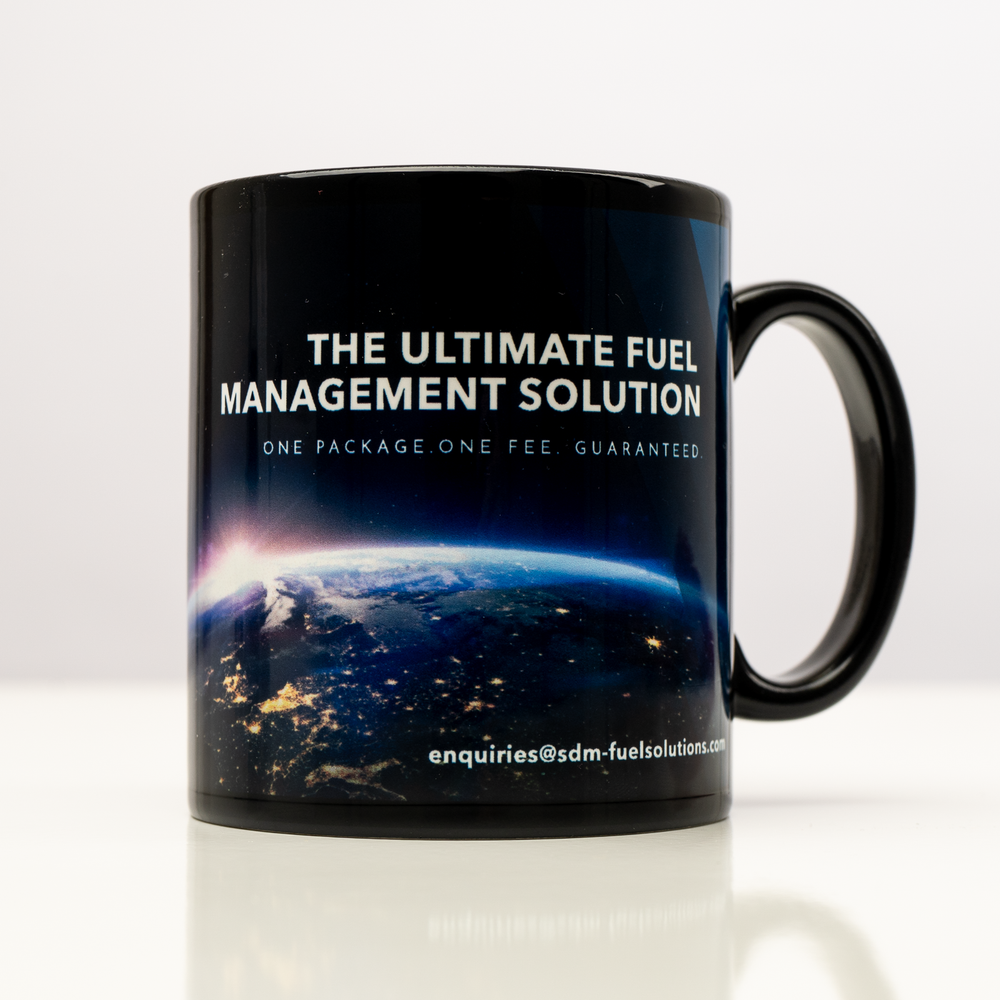
 by Totally Branded
Branded Mug Printing Methods Explained: Which One Is Right for Your Brand?
Why the Decoration Method Matters
It is easy to focus almost entirely on the mug itself when purchasing promotional drinkware.
Product style, shape, colour, capacity and price are obviously important, but the decoration method deserves just as much consideration.
After all, the mug is only half of the finished product.
The other half is your brand.
A fantastic quality mug with poorly chosen decoration can still produce a disappointing result. Equally, selecting the right decoration method can transform a relatively simple mug into an extremely effective piece of branded merchandise.
Different decoration methods have different strengths.
Some are particularly good at producing bold, solid colours.
Some can reproduce photographs and gradients.
Some allow much larger branding areas.
Some provide an extremely durable finish.
Some become considerably more cost-effective at higher quantities.
Others are ideal when only a handful of products are required.

Screen Printing
Best suited to: larger quantities, straightforward artwork, solid colours and coloured ceramic mugs.
Screen printing is a proven and highly effective method for promotional mugs. It produces strong, vibrant branding and becomes particularly cost-effective when the initial setup can be distributed across a larger order.
Its main limitation is artwork complexity.
Because every colour requires its own screen, detailed full-colour designs, gradients and photographs are not naturally suited to the process.
What Is Screen Printing?
Screen printing is one of the traditional decoration methods used for promotional mugs and has been part of the promotional products industry for decades.
Despite the development of newer digital technologies, it remains extremely popular.
There is a good reason for that.
For the right type of artwork and order quantity, screen printing can produce excellent results at a highly competitive cost.
The basic principle involves pushing ink through a fine mesh screen directly onto the surface of the mug. Each colour within the artwork requires an individual screen, after which the inks are cured so that they bond correctly to the product.
From a buyer's perspective, the most important part of that process is this:
What Type of Artwork Works Best?
Screen printing performs particularly well with bold, clean designs.
Think of:
· Solid company logos
· Simple text
· Icons
· Flat colours
· Clear geometric shapes
For this type of artwork, screen printing can produce a beautifully crisp result with strong, vibrant colours.
This makes it particularly well suited to traditional corporate identities where a logo might consist of one or two clearly defined brand colours.
If your company has a straightforward logo and you're ordering a reasonable quantity of mugs, screen printing will often be one of the first options a promotional merchandise supplier considers.
Why Screen Printing Works Well on Coloured Mugs
One of the biggest advantages of screen printing is its compatibility with coloured mugs.
If you've decided that you specifically want:
· Navy mugs
· Black mugs
· Red mugs
· Green mugs
· Burgundy mugs
Screen printing is often the natural choice because the inks can be applied directly to the coloured surface.
This is particularly valuable for businesses that want the product itself to reflect their corporate colour palette.
A company with navy as its primary brand colour, for example, may prefer a navy ceramic mug featuring a contrasting white logo rather than a standard white mug with a navy print.
Screen printing allows that type of branding to be achieved effectively.
Where Screen Printing Has Limitations
Although screen printing is extremely effective for simple artwork, it becomes less suitable as designs become more complicated.
This is particularly important because modern brand identities are often considerably more detailed than they once were.
Many contemporary logos now contain:
· Gradients
· Shadows
· Tonal changes
· Textures
· Detailed illustrations
· Multiple colours
These elements can look fantastic on websites, packaging and digital marketing materials.
However, they don't always translate easily into screen printing.
Screen printing is fundamentally a flat-colour process. Photographs, subtle gradients and highly detailed graphics therefore aren't naturally suited to the method.
In some circumstances, the artwork can be simplified.
Gradients might be removed.
Shadows can be flattened.
Multiple shades may be reduced to a smaller number of solid colours.
That can make a complex logo suitable for screen printing.
The problem is that simplifying artwork can occasionally change the character of the brand.
A company may have invested considerable time and money developing a modern identity, only to find that simplifying it for a particular decoration method makes the logo look noticeably different.
That's why artwork should always be considered alongside the chosen decoration method.
Rather than forcing a complex logo into screen printing, it may be better to choose a method designed specifically to reproduce that level of detail.
Why Does Screen Printing Have Minimum Order Quantities?
One of the questions buyers commonly ask about screen-printed mugs is why suppliers often impose relatively high minimum order quantities.
If a company only needs 20 mugs, why can't a printer simply produce 20?
Technically, they could.
Commercially, however, it may make very little sense.
The reason becomes much clearer when you understand how much preparation happens before the first mug reaches the printing stage.
Each individual colour requires its own setup process.
According to the production process outlined in the source material for this guide, preparing a screen can take approximately 15 minutes. Producing the film for each colour may require another five to ten minutes, followed by another five to ten minutes for exposure. Ink then needs to be prepared and matched, which can sometimes take considerably longer where ceramic colours prove difficult to reproduce. Printer setup and multi-colour registration add further time.
Registration is particularly important for designs containing several colours.
Each screen needs to be aligned precisely so that the different colours land in exactly the correct position.
Even a tiny misalignment can make the finished logo look wrong.
On a straightforward job, this may be relatively quick.
On a difficult multi-colour design, the setup can become significantly more involved.
The important point for the buyer is that all of this work takes place before the first sellable mug has been produced.
Spreading Setup Across the Order
Once you understand that, minimum quantities begin to make much more sense.
Imagine a printer spends two hours preparing machinery, screens and inks for an order.
If the customer orders 20 mugs, those two hours of skilled labour have to be recovered across just 20 products.
If the customer orders 500 mugs, exactly the same setup cost is distributed across 500 products.
The economics are completely different.
This is why screen-printed mug orders often begin at minimum quantities such as 72 units, with exact requirements varying between suppliers and products. The script also notes that even on a straightforward job, at least an hour of skilled setup can be required before printing begins.
For businesses requiring larger quantities, this isn't necessarily a disadvantage.
Once the setup has been completed and production is running, screen printing can become highly efficient.
The important thing is recognising that it is a production method designed primarily for meaningful quantities rather than individual personalised products.
Screen Printing Lead Times
Setup isn't the only factor affecting screen-printed orders.
Production also requires drying and curing stages, particularly where multiple colours are involved.
As a result, the source script gives a typical lead time of approximately two to three weeks from artwork approval through to delivery.
For planned marketing campaigns, exhibitions or gifting projects, this is usually perfectly manageable.
However, it does mean that screen printing may not be the best option if you suddenly realise on Monday that you need 20 branded mugs by Friday.
Again, this doesn't mean one method is better than another.
It simply demonstrates why the intended quantity and deadline should be considered before deciding how a mug should be decorated.
When Should You Choose Screen Printing?
Screen printing is particularly strong when several factors come together:
You want a coloured mug.
Your artwork is relatively simple.
Your logo uses a limited number of solid colours.
You're ordering a reasonable quantity.
You have sufficient time for production.
When those conditions are present, screen printing can provide an excellent combination of quality, durability and value.
If the artwork contains complex gradients, the order quantity is extremely small or the deadline is particularly tight, another method may make more sense.
And that brings us to one of the most flexible alternatives available.
Dye Sublimation
Dye sublimation is fundamentally different from screen printing and has become increasingly popular within the branded mug market because of the flexibility it offers.
Rather than pushing individual colours of ink through separate screens, the design is first printed onto specialist transfer paper using sublimation inks. The transfer is wrapped around the mug before heat and pressure cause the ink to bond into the coated surface.
For the buyer, this creates several major advantages.
Most importantly, there are no individual screens for each colour.
That completely changes the way complex artwork can be approached.
A design containing one colour can be produced.
So can a design containing twenty colours.
Photographs can be reproduced.
Gradients can be reproduced.
Detailed illustrations can be reproduced.
The number of colours doesn't create the same additional setup requirements associated with traditional screen printing.
For businesses with visually complex branding, that can make dye sublimation an extremely attractive option.
Best suited to: full-colour designs, photographs, gradients, personalisation, larger print areas and smaller quantities.
Dye sublimation offers enormous creative freedom because there are no individual screens for each colour.
It can also work well for smaller and more urgent orders because the setup process is considerably simpler.
Its biggest limitation is product colour, with standard sublimation working on white products rather than directly onto coloured mugs.

Full-Colour Branding Without Per-Colour Charges
One of the biggest benefits of dye sublimation is its ability to reproduce full-colour artwork without charging separately for every individual colour.
This is particularly useful for brands whose identities contain:
· Photographs
· Multiple shades
· Gradients
· Detailed illustrations
· Complex graphics
· Colour transitions
Instead of redesigning or simplifying the artwork to suit the production process, dye sublimation can often reproduce the original design much more faithfully.
The print area can also be considerably larger, with designs capable of wrapping around much more of the mug than would normally be achievable with some traditional printing methods.
For creative marketing campaigns, this opens up a huge number of possibilities.
Rather than simply placing a small logo on one side of a mug, businesses can potentially use much more of the available surface as part of the design.
This can turn the mug itself into a much more visually interesting piece of branded merchandise.

Why Dye Sublimation Works for Small Quantities
Another major advantage becomes apparent when you compare the setup process with screen printing.
There are no individual screens to prepare.
There is no lengthy multi-colour registration process.
There isn't the same level of origination cost that needs to be spread across a large production run.
This makes dye sublimation considerably more practical for small quantities.
The source script explains that, because the setup remains relatively straightforward regardless of quantity, minimum order quantities can sometimes be as low as a single mug and express turnarounds of around three working days can be achievable.
This makes dye sublimation particularly useful for:
· Small teams
· One-off events
· Short-notice requirements
· Personalised gifts
· Test campaigns
· Smaller businesses
· Complex full-colour designs
It is a very different production model to screen printing.
Where screen printing benefits enormously from volume, dye sublimation provides flexibility at the smaller end of the market.
Neither approach is inherently superior.
They simply solve different problems.
The Limitations of Dye Sublimation
Dye sublimation offers an enormous amount of flexibility, particularly when it comes to full-colour designs and smaller quantities. However, like every decoration method, it also comes with limitations.
The biggest is the colour of the mug itself.
Standard dye sublimation works best on white or very light-coloured surfaces. This is because sublimation inks are effectively translucent. They don't create an opaque layer of colour over the product in the same way that some traditional printing inks do.
Instead, the colour of the product underneath influences the final appearance of the design.
This is why the classic white sublimation mug is so common.
White provides a neutral background that allows the colours within the artwork to appear accurately and vibrantly.
Trying to reproduce the same full-colour design directly onto a black, navy or dark red mug would create a completely different result.
This can initially feel restrictive, particularly for businesses whose branding naturally lends itself to darker products.
However, there are several alternatives available.
Black Mugs With White Panels
One solution is a black mug featuring a white printable panel.
The majority of the mug retains the black appearance, but a dedicated white section provides the surface required for the sublimated design.
This can actually create a very striking finished product.
The contrast between the dark mug and bright full-colour branding can help the design stand out, whilst still allowing the business to use a darker overall product.
Two-Tone Mugs
Another option is the two-tone mug.
These generally retain a white outer surface suitable for sublimation but introduce colour elsewhere on the product, such as inside the mug or on the handle.
For example, you might have a white mug with:
· A navy interior and handle
· A red interior and handle
· A green interior and handle
· A black interior and handle
This allows businesses to introduce their corporate colours without sacrificing the full-colour printing capabilities of dye sublimation.
For many brands, this provides an excellent compromise.
The artwork retains the white background it needs, whilst the mug itself feels considerably more customised than a completely plain white product.
Dye Sublimation and Personalisation
One area where dye sublimation becomes particularly interesting is personalisation.
Because each transfer can contain completely different artwork without requiring an entirely new set of physical screens, it becomes much easier to introduce variable information.
This could include:
· Individual employee names
· Different departments
· Event dates
· Individual photographs
· Unique messages
· Different graphics
For an employee onboarding campaign, for example, a company could potentially produce the same overall mug design whilst changing the employee’s name on each product.
Traditional screen printing would be poorly suited to that type of requirement because every artwork variation would create additional setup requirements.
Dye sublimation is far more adaptable.
This is one of the reasons it can work particularly well for employee gifting, internal recognition programmes and smaller campaigns where creating something slightly more personal adds value.
How Durable Is Dye Sublimation?
When produced correctly using good-quality mugs and coatings, dye sublimation can provide an excellent and long-lasting finish.
Because the ink is transferred into the specialist coating rather than simply sitting as a thick layer on top of the surface, the result can feel very smooth.
You generally won't run your finger across the mug and feel a raised print.
That gives sublimated mugs a clean, professional appearance.
However, product quality matters enormously.
Not all sublimation coatings are manufactured to the same standard.
Lower-quality coatings may initially look perfectly acceptable but can perform differently after repeated use and dishwasher cycles.
This is particularly important when buying promotional mugs because longevity is one of the main reasons they provide such strong marketing value.
A mug that remains in regular use for years creates repeated exposure for the brand printed on it.
A mug whose branding begins to deteriorate prematurely doesn't offer the same value.
This is another reason why comparing promotional merchandise solely on the lowest unit price can occasionally be misleading.
The decoration method matters, but so does the quality of the blank product being decorated.
When Should You Choose Dye Sublimation?
Dye sublimation is particularly worth considering when:
· Your design contains multiple colours.
· Your artwork includes gradients.
· You want to reproduce photographs.
· You need a larger print area.
· You're ordering relatively small quantities.
· You require personalisation.
· You have a shorter deadline.
· You're happy to use a white or predominantly white mug.
For these types of orders, dye sublimation can provide an excellent combination of flexibility, quality and value.
If your priority is a dark-coloured mug with a relatively simple logo, screen printing may be the more natural choice.
If you're looking for a premium finish on stainless steel drinkware, however, there is another decoration method entirely.
Laser Engraving
Laser engraving is fundamentally different from both screen printing and dye sublimation.
Rather than applying ink to the surface of the product, laser engraving removes part of the outer coating to reveal the material underneath.
This means the branding isn't printed onto the product in the traditional sense.
It is physically engraved into it.
For suitable products, this creates an extremely durable and premium finish.
Laser engraving is particularly associated with:
· Stainless steel travel mugs
· Insulated drinkware
· Metal bottles
· Premium reusable cups
· Corporate gifts
It has a completely different aesthetic to colourful printed branding.
Rather than creating a bold splash of colour, engraving tends to be more subtle and understated.
For premium corporate merchandise, that can be exactly what is required.
Best suited to: premium stainless steel drinkware, long-term use, executive gifts and subtle corporate branding.
Laser engraving removes the surface coating to expose the underlying material, producing a permanent and understated finish.
It works particularly well when the product itself is intended to feel premium.
The trade-off is that you cannot reproduce full-colour artwork or select a Pantone colour for the engraved area.
How Laser Engraving Works
The process uses a computer-controlled laser to remove the uppermost surface of a coated product.
Imagine a black powder-coated stainless steel travel mug.
The outside of the product appears black because of the coating applied to the steel.
When the laser passes across the designated branding area, it removes that coating in the shape of the logo.
The stainless steel beneath is then revealed.
The result is a metallic version of the logo contrasting against the darker outer finish.
There are no inks.
There are no screens.
There is no printed layer sitting on top of the product.
The branding is created by exposing the underlying material.
Why Laser Engraving Feels Premium
Laser engraving is often associated with premium merchandise because of its appearance and permanence.
A brightly printed logo can be perfect for exhibitions and awareness campaigns where visibility is the priority.
Engraving communicates something slightly different.
It is more subtle.
It can make the product itself feel like the focus, with the branding incorporated into the design rather than dominating it.
This works particularly well for client gifts and executive merchandise.
Imagine receiving a high-quality vacuum insulated travel mug.
One version has a very large, brightly coloured logo printed across the front.
The other has a smaller, precisely engraved logo revealing the stainless steel underneath.
Neither is necessarily wrong.
But the second option may feel more like a retail-quality gift and less like a traditional promotional giveaway.
That distinction can matter enormously depending on the audience.
The Durability Advantage
One of laser engraving's strongest advantages is durability.
Because there is no printed ink layer sitting on top of the product, there is very little to wear away through normal use.
The logo can't simply peel off.
It isn't dependent on an adhesive.
And provided the product itself remains in good condition, the engraving should remain visible.
For merchandise intended to be used regularly over a long period, this is a major benefit.
Travel mugs are a perfect example.
Someone may use the same insulated cup every working day.
It could be taken in and out of bags.
Placed into car cup holders.
Used on trains.
Taken to meetings.
Washed repeatedly.
Over several years, that represents a considerable amount of wear.
A permanent decoration method makes a great deal of sense on a product expected to experience that level of use.
Where Laser Engraving Works Best
Laser engraving isn't suitable for every mug.
Traditional ceramic mugs aren't generally the products people associate with this method.
Instead, it performs particularly well on coated metal products where removing the surface reveals a contrasting material beneath.
This includes many stainless steel travel mugs and bottles.
The colour of the product can also dramatically influence the final appearance.
Dark powder-coated products often create a particularly strong contrast when the coating is removed to reveal bright stainless steel underneath.
Black, navy and other darker finishes can therefore produce extremely attractive results.
The Colour Limitation
The main limitation of laser engraving is obvious once you understand the process.
You cannot choose the colour of the engraving in the same way you choose printing ink.
The final colour is determined by the material underneath the product's outer coating.
If the laser reveals silver stainless steel, your logo will appear silver.
You cannot decide that you'd like the engraved area to be Pantone blue, bright red or fluorescent green.
For businesses with strict requirements around reproducing exact corporate colours, this may make engraving unsuitable.
However, many brands deliberately choose engraving because they don't want full-colour branding.
The subtle metallic finish is part of the appeal.
The question therefore becomes less about whether engraving can reproduce your brand colours and more about whether you're comfortable using a simplified, premium interpretation of your identity.
Artwork for Laser Engraving
Artwork requirements also differ slightly.
Because the finished engraving generally appears in a single material colour, complex full-colour artwork usually needs to be converted into a simpler format.
Clean vector artwork works particularly well.
Company names, icons, simple logos and line graphics can all produce excellent results.
Very fine details may need to be reviewed depending on the size of the branding area and the product being engraved.
This is where an experienced artwork team becomes useful.
They can assess the logo and advise whether any minor adjustments are necessary to ensure the finished engraving remains clear.
Again, this isn't about changing the brand unnecessarily.
It is simply about making sure the artwork works effectively with the physical production method being used.
Laser Engraving and Perceived Value
One of the most important considerations with laser engraving is that the decoration method often complements a more expensive product.
A standard ceramic mug and a vacuum insulated stainless steel travel mug serve slightly different purposes.
The ceramic mug may be an excellent promotional giveaway.
The insulated product may be intended as a genuine gift.
When businesses spend more on the underlying product, it often makes sense to select a decoration method that reinforces that premium positioning.
Laser engraving does exactly that.
It creates branding that feels permanent and considered.
Rather than looking like a logo has simply been added to a product, the branding can appear integrated into the product itself.
For high-value recipients, this can significantly improve the overall presentation.
When Is Laser Engraving Worth the Additional Cost?
Laser engraving can sit towards the more expensive end of the decoration options, so it isn't necessarily the right solution when the primary objective is producing the greatest possible quantity for the lowest possible budget.
If you're ordering thousands of inexpensive mugs for a mass giveaway, it would usually make little sense to select a premium stainless steel product purely so it can be engraved.
However, price needs to be considered in the context of the campaign.
Imagine sending a premium gift to 50 of your most valuable customers.
The objective isn't necessarily to spend as little as possible per recipient.
It may be to provide something genuinely useful and desirable that reflects the importance of that relationship.
In that scenario, spending more on an insulated travel mug and permanent engraving can be entirely justified.
The recipient may use the product for years.
That creates repeated interaction with your brand and potentially makes the additional upfront investment worthwhile.
When Should You Choose Laser Engraving?
Laser engraving is particularly appropriate when:
· You're using stainless steel or coated metal drinkware.
· You want a premium finish.
· Longevity is particularly important.
· You're buying client or executive gifts.
· You prefer subtle branding.
· Exact Pantone colour reproduction isn't essential.
· The product is expected to be used frequently.
It is less appropriate when your campaign depends heavily on colourful graphics, photographic designs or exact reproduction of multiple corporate colours.
In those situations, another method will normally provide greater creative flexibility.
Pad Printing
The fourth main decoration method used within branded drinkware is pad printing.
Pad printing doesn't always receive as much attention as screen printing, sublimation or laser engraving, but it serves an important role within promotional merchandise production.
Its particular strength is its ability to apply branding to areas and shapes that may be difficult to reach using other methods.
Rather than relying on a flat screen or large transfer, pad printing uses a flexible silicone pad to pick up the inked design and transfer it onto the product.
Because the pad can flex and conform to different surfaces, it is particularly useful for products with unusual shapes or restricted branding positions.
Best suited to: smaller branding areas, simple logos, unusual surfaces and applications where flexibility is important.
Pad printing uses a flexible silicone pad to transfer the artwork onto the product, allowing it to work with shapes and areas that can sometimes be difficult to decorate using other methods.
Its print area is generally more restricted, so it isn't the natural choice for large wraparound artwork.
Why Is It Called Pad Printing?
The name describes the process surprisingly well.
A design is prepared on a printing plate.
Ink fills the engraved area of that plate.
A soft silicone pad picks up the ink.
The pad then presses onto the product and transfers the design.
The flexibility of the silicone is the important part.
It allows the printing surface to adapt to curves and contours that would be much more difficult to decorate using a completely flat process.
This is why pad printing is used across an enormous range of promotional merchandise, not just mugs.
Pens, gadgets, small plastic products and irregularly shaped items can all benefit from the technique.
Pad Printing on Mugs
On promotional mugs, pad printing is often used where a relatively small and straightforward branding area is required.
It can be fast and cost-effective, particularly for simple logos.
However, the print area is generally smaller than what can be achieved through methods such as dye sublimation.
That is one of the most important things buyers need to understand.
A very cheap promotional mug quotation may sometimes be based on a relatively small pad print.
That isn't necessarily a problem.
If all you require is a discreet company logo, a small print area may be completely appropriate.
But if you're expecting a large, impactful design wrapping around the product, pad printing may not achieve the visual result you have in mind.
This is why print dimensions should always form part of any meaningful quotation comparison.
Two suppliers may appear to be quoting the same mug with the same logo, while actually offering significantly different branding specifications.
The Advantages of Pad Printing
Pad printing offers several useful advantages.
It can be relatively quick.
It can be economical.
It works well for simple branding.
It can access difficult or curved surfaces.
And it can be an excellent solution where only a smaller print area is required.
For the right project, those benefits make it a perfectly sensible choice.
The important thing is not to judge the method purely by its lower cost.
A smaller print area isn't automatically a disadvantage.
For some premium merchandise, subtle branding can actually look better than an oversized logo.
The decision should be driven by the intended appearance rather than the assumption that bigger branding is always better.
The Limitations of Pad Printing
Where pad printing becomes less suitable is when the artwork demands a large, highly detailed or visually complex design.
If your objective is a photographic wraparound image, dye sublimation will clearly offer far greater flexibility.
If you're looking for a permanent metallic finish on a premium travel mug, laser engraving will be the more natural option.
And if you're ordering large quantities of coloured ceramic mugs with bold solid-colour artwork, screen printing may offer a stronger combination of scale and visual impact.
Pad printing fills a particular space between these methods.
It is useful, efficient and adaptable, but it isn't designed to replace every other decoration technique.
When Should You Choose Pad Printing?
Pad printing is worth considering when:
· Your logo is simple.
· The branding area can be relatively small.
· The product shape makes other methods difficult.
· Cost efficiency is important.
· You want discreet rather than expansive branding.
· The product is particularly suited to the process.
As with every other decoration method, the best approach is to discuss the desired result rather than requesting a production process simply because you've heard of it.
Tell the supplier what you want the finished product to look like.
An experienced production team should then be able to advise which method is most appropriate.
Choosing the Right Mug Printing Method for Your Order
Understanding how each decoration method works is useful, but most buyers don't begin an order by deciding that they specifically want screen printing or dye sublimation.
Usually, the starting point is much simpler.
You know what you need the mugs for.
You know roughly how many people will receive them.
You have a logo or design.
You have a budget.
And you probably have a date by which everything needs to arrive.
The decoration method should follow those requirements rather than dictate them.
Looking at some common buying scenarios makes the differences between the four methods much easier to understand.

Scenario One: 500 Mugs for an Exhibition
Imagine you're attending a major exhibition and want 500 branded mugs to give away to visitors.
Your company has a simple two-colour logo and you're primarily interested in generating brand awareness.
In this situation, screen printing is likely to be an extremely strong option.
The quantity is large enough to justify the initial setup involved in producing the screens, and once production begins, that setup cost is distributed across 500 mugs.
Your artwork is also relatively straightforward, which plays directly to the strengths of screen printing.
You could select a mug in one of your corporate colours and apply the logo in a contrasting colour combination.
Alternatively, a standard white ceramic mug could keep the overall cost particularly competitive.
For an exhibition campaign like this, there may be little reason to move into premium laser engraved travel mugs unless the audience or campaign strategy specifically justifies the additional investment.
The objective is broad distribution.
A good-quality ceramic mug with clear, professional branding is likely to achieve exactly what is required.
Scenario Two: 30 Mugs for a Small Team
Now imagine you're ordering mugs for a team of 30 employees.
The design contains several colours and you'd like each mug to feature the employee's name.
Immediately, the requirements change.
Traditional screen printing becomes much less attractive because of the relatively small quantity and the fact that each mug needs to contain variable information.
Dye sublimation is far better suited to this type of project.
There are no individual screens required for each colour, the artwork can contain complex full-colour elements and the employee names can be changed from one design to the next.
You could potentially create a consistent overall design whilst personalising each mug individually.
For an internal employee campaign, this can make the merchandise feel considerably more thoughtful.
Instead of receiving exactly the same promotional mug as everyone else, each employee receives something specifically produced for them.
This is a good example of why the cheapest method in isolation isn't necessarily the best method for the order.
Screen printing might offer excellent value at 500 units, but it isn't designed to solve this particular problem.
Dye sublimation is.
Scenario Three: Premium Gifts for Important Clients
Now consider a completely different requirement.
You're sending gifts to 50 of your most valuable customers.
Rather than a traditional ceramic mug, you've selected a high-quality insulated stainless steel travel mug.
You want the finished product to feel premium and understated.
In this situation, laser engraving becomes an obvious option.
A permanent engraved logo can complement the quality of the product without making it feel overly promotional.
The objective here isn't maximum logo size or producing the lowest possible unit price.
It's creating a product that the recipient genuinely wants to use.
That distinction is important.
If someone uses an insulated travel mug every morning for several years, the product can create a significant number of interactions with your brand.
For a high-value customer relationship, spending more per item can therefore make commercial sense.
How Your Logo Influences the Printing Method
Your artwork is one of the biggest factors determining which decoration method is suitable.
This is something businesses often don't consider until after choosing a product.
A mug might look perfect online, but if the available decoration method isn't compatible with your logo, compromises may be required.
Understanding your artwork before selecting the product can therefore save considerable time.
Why Artwork Files Matter
Once the decoration method has been selected, the supplier will usually request artwork in a suitable format.
For many traditional decoration methods, vector artwork is preferred.
Vector files are created using mathematical paths rather than fixed pixels, which means they can be enlarged or reduced without losing quality.
Common vector formats include:
· AI
· EPS
· SVG
· Certain PDF files
JPEG and PNG files are raster images, meaning they are constructed from pixels.
A high-resolution raster image may still be perfectly suitable for some applications, particularly dye sublimation, but a low-resolution logo downloaded from a website may cause problems.
This is why promotional merchandise suppliers often ask customers for the original logo files rather than simply copying the logo from the company's website.
The artwork team isn't trying to make the ordering process difficult.
They're trying to ensure that the file used for production produces the cleanest possible result.
Pantone Colours and Brand Consistency
Colour consistency is another important consideration when printing branded merchandise.
A company may describe its logo as "blue", but there are thousands of different blues.
If accurate brand reproduction matters, your supplier may ask for a Pantone reference.
The Pantone Matching System provides standardised colour references that allow printers and manufacturers to work towards a specific shade.
This becomes particularly important for screen printing because inks may need to be mixed to match corporate colours.
If your business has formal brand guidelines, Pantone references will often be included alongside other colour values such as CMYK, RGB and HEX codes.
Providing this information helps reduce interpretation.
Instead of asking a printer to produce "our dark blue", you can provide the exact reference specified within your brand guidelines.
Print Size: Bigger Isn't Always Better
One of the easiest mistakes to make when designing promotional merchandise is assuming the logo should always be as large as physically possible.
Sometimes that works.
For exhibition giveaways and bold awareness campaigns, large branding can create excellent visibility.
But bigger doesn't automatically mean better.
On premium merchandise, oversized logos can sometimes make the product feel less sophisticated.
A smaller laser engraved logo on a premium travel mug may create a much stronger overall impression than branding that dominates the entire product.
The correct print size depends on the objective.
Ask yourself whether you want the product to function primarily as advertising, as a gift, or somewhere between the two.
That answer should influence the branding approach.
Understanding Artwork Proofs
Before production begins, suppliers will generally provide an artwork proof showing how the branding is expected to appear on the product.
This is one of the most important stages of the ordering process.
Don't treat the artwork proof as a formality.
Review it carefully.
Check:
· The correct logo has been used.
· Spelling is accurate.
· The orientation is correct.
· The approximate print size looks appropriate.
· The branding position is correct.
· The colours are as expected.
· Any personalisation is correct.
If something doesn't look right, raise it before approving production.
Once hundreds of mugs have been printed, correcting an error becomes far more complicated.
Production Time: Why the Method Matters
Decoration method can also have a significant impact on how quickly your order can be completed.
The source script provides a useful illustration of the difference.
Screen printing can typically involve a lead time of around two to three weeks because of the screen preparation, setup, printing and curing involved. Dye sublimation, by comparison, can sometimes be completed on express lead times of around three working days because the setup process is much simpler.
This doesn't mean every sublimated mug can always be delivered within three days or every screen-printed order will always take several weeks.
Stock availability, quantity, artwork approval and production capacity all matter.
But the underlying process does influence what is realistically achievable.
If you have a fixed event date, tell the supplier before selecting the product.
There is little benefit in finding the perfect mug if the production method means it can't arrive in time.
Planning Ahead Gives You More Choice
The easiest way to avoid production-time problems is to begin the process early.
When businesses leave merchandise orders until the last minute, choices become restricted.
The mug you want may not be available.
The preferred decoration method may take too long.
There may not be enough time for physical sampling.
Express production may increase the cost.
Or the artwork may need to be changed to suit a faster method.
Planning ahead gives you more control over all of these factors.
Wherever possible, start by working backwards from the date you actually need the products in your hands.
Allow time for:
· Product selection
· Quotation
· Artwork preparation
· Proofing
· Revisions
· Production
· Quality checks
· Delivery
The result is usually a smoother ordering process and a wider choice of products and decoration methods.
Common Mistakes to Avoid When Ordering Printed Mugs
Understanding the different decoration methods makes choosing branded mugs considerably easier. However, there are still several common mistakes that can affect the finished result, increase costs or cause unnecessary delays.
Most of them are relatively easy to avoid once you know what to look for.
Choosing the Mug Before Considering the Artwork
It is completely understandable that buyers usually begin by choosing the mug they like.
After all, that's the physical product you're purchasing.
However, the product and the artwork need to work together.
You might select a particular dark-coloured ceramic mug and then discover that the full-colour photographic design you intended to use is much better suited to dye sublimation on a white mug.
Alternatively, you might choose a product because of a photograph on a website without realising that the available print area is significantly smaller than you expected.
The better approach is to consider the product and decoration method together.
Before making a final choice, provide your artwork to the supplier and ask what branding options are available on the product.
That way, you understand what the finished mug can realistically look like before committing to it.

Focusing Only on the Unit Price
The cheapest unit price doesn't automatically produce the best campaign.
A cheaper decoration option may come with a smaller print area.
It may not reproduce your artwork accurately.
It may require the design to be simplified.
Or it may not create the premium appearance you're trying to achieve.
That doesn't mean you should automatically spend more.
It simply means you should compare the complete specification.
If two quotations are different, check:
· The exact mug being supplied.
· The branding method.
· The print dimensions.
· Number of print colours.
· Setup or origination.
· Delivery.
· Production lead time.
· Any other services included.
Only then can you make a meaningful comparison.
Approving Artwork Too Quickly
Artwork approval can feel like a small administrative step when you're busy trying to organise an event or marketing campaign.
It isn't.
Your approval is effectively the point at which you're confirming that the supplier can proceed with production.
Take a few minutes to inspect the proof properly.
Check the spelling.
Check the logo.
Check the orientation.
Check the size.
Check any names or dates.
If you've ordered several variations, check each one.
For personalised orders, pay particular attention to lists of employee or customer names.
Catching an error on a digital proof is simple.
Catching it after hundreds of mugs have been decorated is not.
Final Thoughts
Branded mugs remain one of the most versatile promotional products available.
They're practical, familiar and capable of remaining in everyday use for years.
But the way a mug is decorated can dramatically influence how the finished product looks, how much it costs and which artwork can be reproduced successfully.
Screen printing remains an excellent choice for straightforward designs and larger quantities. It works particularly well with solid colours and coloured ceramic mugs, although the setup required means it is less practical for very small runs or highly complex artwork.
Dye sublimation provides far greater freedom for full-colour designs. Photographs, gradients and complex graphics can all be reproduced without creating individual screens for every colour, and the relatively simple setup means smaller quantities and faster production can be achievable.
Laser engraving offers something completely different. Instead of adding ink, it creates branding by removing the outer coating of suitable products. The result is permanent, subtle and particularly well suited to premium stainless steel drinkware.
Pad printing fills another important role, providing a practical way to decorate smaller or more difficult areas using a flexible transfer process.
None of those methods is universally better than the others.
The best choice comes from matching the production process to the product, artwork, quantity, deadline and audience.
If you're unsure, start with the brief rather than the terminology.
Think about who will receive the mugs.
Think about what you want them to look like.
Consider how many you need.
Decide when you need them.
Provide the best artwork you have.
And then work with your supplier to identify the decoration method that will deliver the best result.
The aim isn't to become an expert in screen printing, sublimation, engraving or pad printing.
It's simply to understand enough about each process to ask the right questions and make an informed decision.
Get that combination right and the production method almost becomes invisible.
What remains is what matters most: a well-made branded mug that represents your business properly and that people genuinely want to use.